Introduction: a wheel brand no longer has to start like a big corporation
For many small 4x4 businesses, building an off-road wheel brand used to feel out of reach. The old model required high minimum orders, expensive mould investment, large warehouse space, professional packaging design and a sales network big enough to absorb risk. Today, the market is different. Workshops, tyre stores, online 4x4 accessory shops and regional distributors already know their local customers better than most large brands. They understand which vehicles are popular, which offsets sell, which finishes customers ask for and what price points are realistic.
This creates a new opportunity: instead of only reselling other companies' wheels, a smaller business can begin building its own private-label off-road wheel line. The goal is not to launch 30 designs on day one. The smarter strategy is to start with one proven design, two or three colours, a clear brand identity and a manageable first production run. With the right manufacturer, a private-label wheel program can begin from around 120 pieces for selected existing moulds, making it far more realistic for growing businesses.
Why build your own off-road wheel brand?
A private-label wheel brand gives a small business more control over its future. When you only sell other brands, your pricing, margin and product availability are often controlled by someone else. If the brand increases prices, changes distributors or sells directly to your customers, your position becomes weaker. When your own brand appears on the center cap, carton, website and social media, you begin creating an asset that belongs to your company.
The biggest benefit is differentiation. Many off-road wheels in the market look similar, and many dealers end up selling the same catalogue products. That usually leads to price comparison. A private-label product lets you build a stronger story around your own market: your preferred vehicle fitments, your local terrain, your workshop experience, your customer taste and your service standard.
It also helps long-term customer retention. When a customer buys a wheel carrying your brand, they remember your shop, not just the factory or importer behind it. Over time, that brand recognition can support repeat sales, accessories, replacement center caps, matching spare wheels and dealer partnerships.
Why import off-road wheels from China?
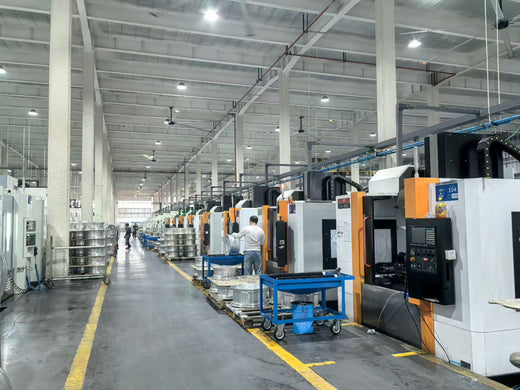
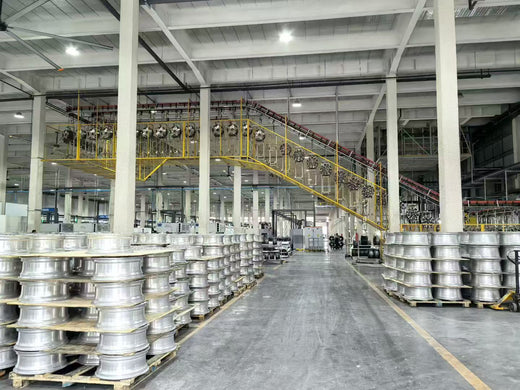
China is one of the most important production bases for aftermarket wheels because it combines mature aluminium casting, machining, finishing, packaging and export supply chains. For a small business, the value is not simply “cheap wheels.” The real value is access to flexible manufacturing: existing mould libraries, custom center caps, colour options, packaging design, mixed model planning and export support.
A good Chinese wheel supplier should not be judged only by price. The more important questions are: Does the factory understand your target market? Can it support consistent specifications? Can it provide load rating information, finish options, packaging and documentation? Can it help you avoid common low-quality products and build a repeatable private-label program?
Quality is not determined by country alone. Quality depends on process control, material selection, machining accuracy, heat treatment, inspection, testing and management systems. International quality management frameworks such as ISO 9001 focus on consistent processes and documented quality systems, which is why serious buyers should ask about quality control, test procedures and production traceability rather than simply asking for the lowest price.
Why 1500kg load-rated moulds matter in the 4x4 market
Many standard aftermarket wheels are made for normal passenger vehicles or light SUV applications. In the 4x4 market, customers often use their vehicles for towing, touring, work, overlanding and off-road driving. These vehicles may carry extra equipment such as bull bars, winches, roof racks, drawers, water tanks, camping gear and larger tyres. A stronger wheel specification can become a selling point, especially for dealers who want to position their products above common low-load market wheels.
A 1500kg load-rated mould does not mean the vehicle will automatically use 1500kg on each wheel. It means the wheel has been developed with a high load capacity target. For a dealer or private-label brand, this gives a clearer marketing message: heavy-duty structure, serious 4x4 use and stronger specification confidence. It also helps separate your brand from cheaper wheels that compete mostly on appearance and price.
Will a higher load rating make the wheel too heavy and waste fuel?
This is a reasonable question. A wheel designed for higher load capacity can be heavier if the manufacturer only adds material without optimizing the structure. But load rating and weight are not the same thing. The better question is whether the wheel design, material and manufacturing method are balanced properly.
For example, flow forming can help create a stronger and lighter barrel compared with a basic cast structure. In metal flow forming, rollers apply pressure to shape and thin the wheel barrel while improving the material structure. The result can be a better strength-to-weight balance for certain wheel designs. This does not mean every flow-formed wheel is automatically perfect, but it shows why manufacturing method matters when discussing load, weight and performance.
For customers, the message should be simple: choose a wheel that matches the vehicle use. A daily city SUV does not need the same specification as a loaded touring 4x4. But for dealers targeting Hilux, Ranger, LandCruiser, Patrol, D-MAX, Navara, Prado and similar vehicles, a high-load off-road wheel range can be a stronger long-term positioning.
Why stop relying only on other people's brands?
Reselling established brands can be useful, especially when customers already ask for them. But it has limitations. You may have limited margin, limited control over supply and little ability to build long-term equity. If ten other shops sell the same wheel, the customer can easily compare price and buy elsewhere.
A private-label brand changes the conversation. Instead of saying “we also sell this brand,” you can say “this is our wheel program, selected for our customers, with our fitments and our support.” That makes the product feel more intentional and gives your business a reason to communicate with customers after the first sale.
Why avoid imitation brands and fake logos?
Using imitation logos or designs that intentionally copy another brand may create short-term attention, but it is not a real business strategy. It can damage trust with dealers, create legal risk and make your company look like a low-value trader. Serious customers do not want to build their business around fake branding. They want reliable supply, clear specifications and a brand they can promote confidently.
The better path is to create your own simple identity. The logo does not have to be famous on day one. It only needs to be consistent, professional and repeatable. Your own center cap, carton label, product naming and website presentation are the first steps toward a real brand.
Start small: one design, 120 pieces and two or three colours
A common mistake is trying to launch too many products at once. For a small business, this creates inventory pressure and weakens focus. A better first step is to select one strong wheel design that fits your market, then produce around 120 pieces for selected existing moulds. This may be split into practical finishes such as matte black, machined face and bronze depending on the production plan.
For example, a first private-label order might include one 17-inch or 18-inch 6x139.7 design for popular 4x4 vehicles. The business can use this first batch to test customer response, build content, install wheels on demo vehicles and collect real feedback before expanding into more sizes or PCD options.
This approach reduces risk. You are not guessing which 20 designs will sell. You are learning from one focused product and building your brand step by step.
Why an integrated center cap looks more premium than a simple metal nameplate
Branding details matter. Many small wheel programs start with a simple metal nameplate or sticker logo. This can work at the beginning, but it often looks temporary. An integrated center cap, where the logo and cap design feel like part of the wheel, gives a stronger and more premium appearance.
A good center cap does more than carry a logo. It affects the entire visual identity of the wheel. It can make the product look more engineered, more complete and more valuable. For private-label brands, the center cap is one of the most visible branding points in every product photo, installation video and customer post.
That is why a custom molded cap, blank cap, embossed cap or brand-specific cap design can be worth the effort. It tells customers the wheel was not just taken from a generic catalogue and renamed. It shows that the brand owner invested in presentation.
Why this should be treated as a long-term business
A wheel brand is not built from one shipment. It is built from repeatable product quality, consistent fitments, good photography, dealer support, customer feedback and reliable after-sales service. The first order proves the market. The second order improves the product mix. The third order begins to establish brand recognition.
This is why private-label wheels should be viewed as a long-term business asset. At the beginning, the brand may only have one or two models. But with each production cycle, you can refine your colours, packaging, center cap, product page, dealer materials and social media content. Over time, your private-label line can become something competitors cannot easily replace.
How Challenger supports small-batch private-label wheel projects
Jiangxi Challenger Auto Parts Co., Ltd. supports dealers, wholesalers, online sellers and 4x4 brands that want to build their own off-road wheel products. Our support can include existing mould selection, 1500kg load-rated wheel programs, flow-formed options, custom center caps, logo application, finish selection, carton design, packaging labels and export coordination.
Instead of forcing every customer into a large-volume program, we help suitable businesses start from a focused, practical plan. For selected existing moulds, low MOQ production from around 120 pieces can help small businesses test the market without taking on excessive inventory pressure.
Conclusion: build something you own
The off-road wheel market is competitive, but that does not mean small businesses have no opportunity. The opportunity is not to copy every low-price product in the market. The opportunity is to build a focused, well-presented private-label wheel brand with stronger specifications, better branding and a clear long-term plan.
Start with one proven design. Choose two or three finishes. Use a professional center cap. Build around reliable fitments. Tell a clear story. Then improve with every order. That is how a small 4x4 business can move from reseller to brand owner.
Suggested Visual Section: Logo Plate vs Integrated Center Cap
The following two images are included as draft visual references. Because they show third-party brands, replace them with Challenger / client-owned images before publishing publicly.
|
|
|
|
Traditional logo plate / badge-style cap reference |
Integrated cap reference: a more premium private-label look |


Internal link plan
OEM Solutions - Link when discussing private-label support and custom logo/packaging.
Heavy Duty Wheels - Link when discussing 1500kg load-rated wheel programs.
Wheel Technology - Link when discussing flow forming, casting and quality control.
Capabilities - Link when discussing production, inspection and export capability.
Gallery - Link when mentioning factory, production and packaging visuals.
Contact Us - Use at the end as the main conversion CTA.
Recommended external references
ISO 9001:2015 - Quality management systems - Use as a reference when discussing process-based quality management.
Alloy wheel overview - Background reference for alloy wheel material and general wheel manufacturing concepts.
Flow forming / shear forming overview - Background reference for flow forming as a metal-forming method. Use only if you are comfortable citing Wikipedia; replace with a more industry-specific source if available.
Suggested FAQ section for the blog
Can a small business really start its own off-road wheel brand?
Yes. A focused private-label program can start with one selected existing mould, practical fitments and a controlled first order. The key is to begin with a product that fits your market instead of trying to launch a full catalogue at once.
What is the recommended starting MOQ?
For selected existing moulds, low MOQ production can start from around 120 pieces per design. Final MOQ depends on model, finish, logo customization, packaging and production schedule.
Why choose a 1500kg load-rated wheel program?
A higher load-rated program helps position the product for serious 4x4 use, touring, towing and work vehicles. It also creates a clearer point of difference against common low-load market wheels.
Can I customize the center cap and packaging?
Yes. Private-label support can include custom center caps, logo application, carton design, product labels and other branding details depending on the selected model and order plan.